
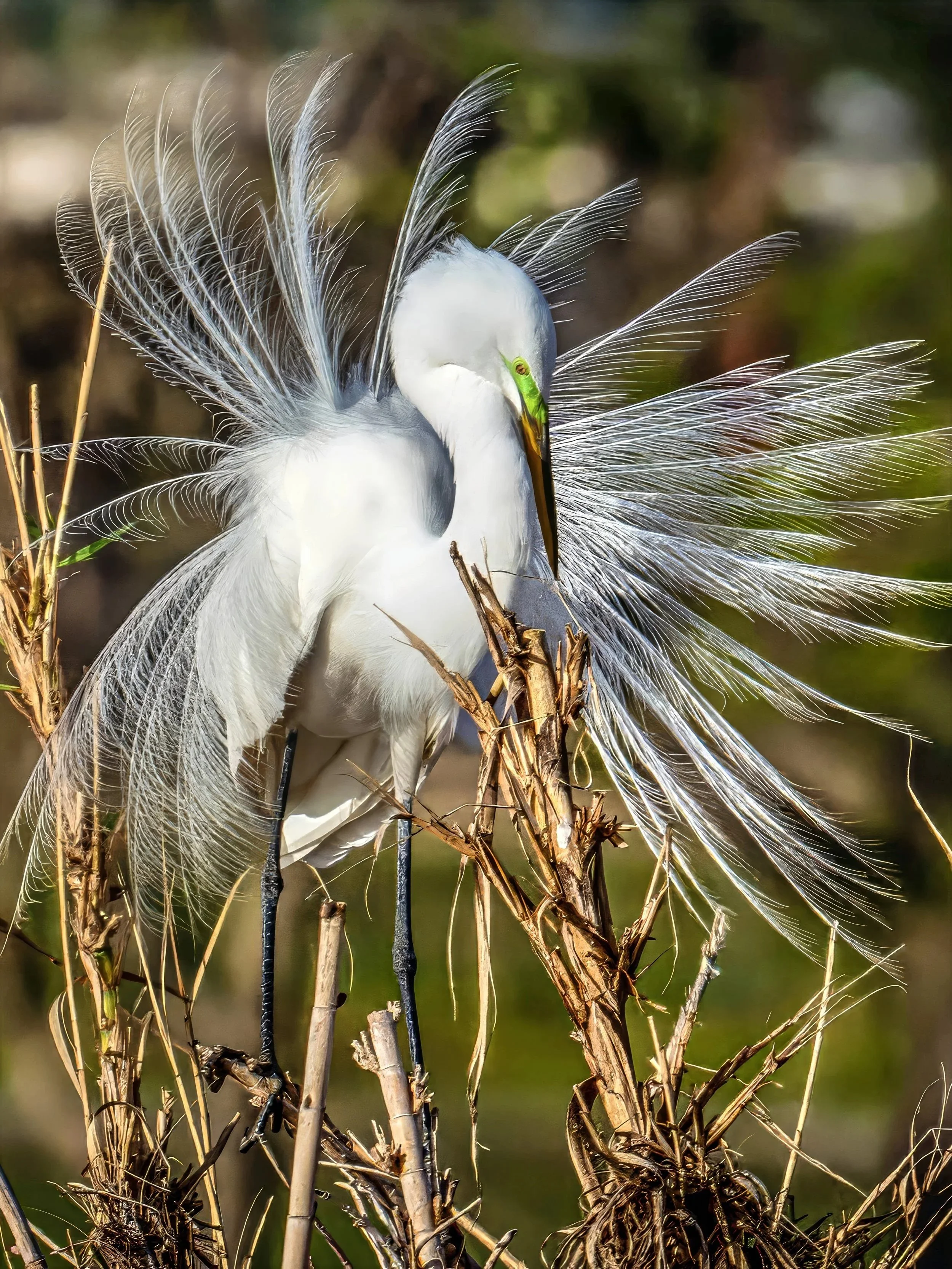
Great Egret
Breeding Season
There is a reason birdwatchers stop in their tracks when a Great Egret appears. Its pure white plumage, graceful posture, and slow wingbeats create an almost ethereal presence. Whether standing in still water or gliding overhead, it carries a sense of calm that immediately draws you in.
Spring offers a rare opportunity to witness the species at one of its most fascinating times of the year. Courtship rituals become more animated, nesting colonies come alive, and wetlands become essential staging grounds for this key moment in the bird’s life cycle.
This photograph showcases the 3-foot-tall bird during breeding season. Fine, lacy aigrette plumes flow from its back, creating a striking display used to attract a mate. At the same time, the skin around its eyes turns a vibrant green, adding a surprising touch of color to its elegant and radiant appearance.
Ironically, the very feathers that make breeding Great Egrets so extraordinary once placed the species at risk. Demand for ornamental plumes fueled intense hunting pressure in the late nineteenth century, helping spark the conservation movement that ultimately led to stronger protections for birds and wetlands.
Today, seeing a Great Egret in breeding plumage is more than a beautiful wildlife encounter. It is a reminder that when habitats are protected and conservation efforts endure, nature has an extraordinary capacity to recover and flourish.