
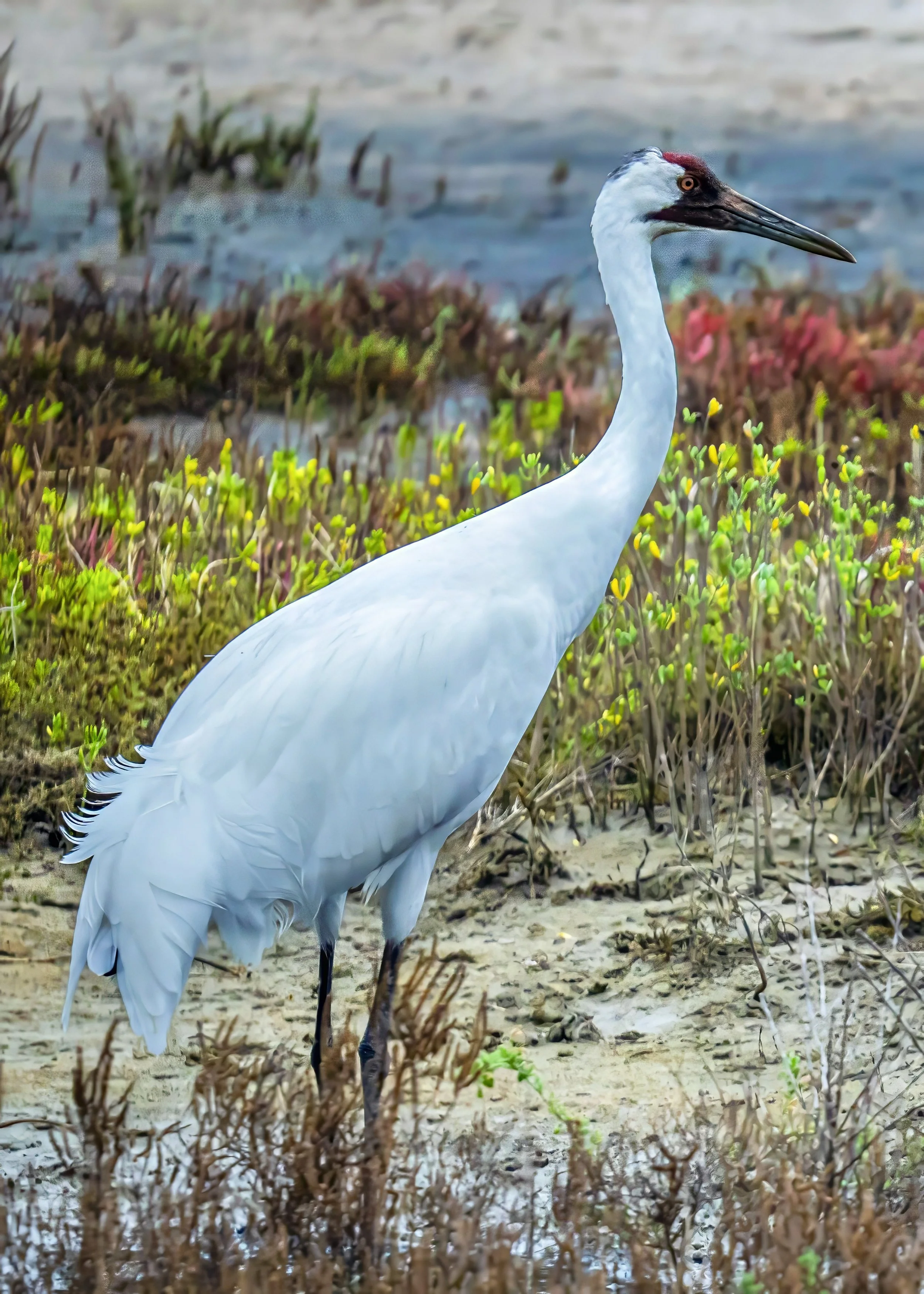
Whooping Crane
Wildlife Recovery
Once perilously close to disappearing forever, with fewer than two dozen wild birds remaining in the 1940s, the Whooping Crane now stands as an enduring symbol of nature's resilience.
Known for their graceful movements and trumpet-like calls that can carry for miles, Whooping Cranes are among the most impressive birds in North America. They form strong lifelong pair bonds and perform elaborate courtship dances filled with leaps, bows, wing spreads, and synchronized movements that strengthen those connections.
Standing tall at 5 feet with a wingspan of 7 to 8 feet, the Whooping Crane commands attention wherever it appears. Its white plumage shines against coastal marshes and prairie wetlands, while black wingtips become visible only in flight. With a wingspan stretching more than seven feet, it is both elegant and powerful, embodying the wild spirit of the landscapes it depends upon. Its epic 2,000-mile migration route spans from Canada to the Gulf Coast of Texas.
But their story nearly ended before it had a chance to continue. Habitat loss, hunting, and declining populations pushed the species to the brink of extinction. What followed became one of conservation's greatest success stories as scientists, conservationists, landowners, and communities worked together to protect the species and its habitat.
Encountering a Whooping Crane is a reminder of nature’s resilience and stands as living proof that preserving the delicate ecosystems they call home truly matters.